
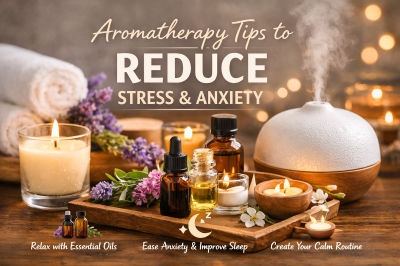
Aromatherapy Tips to Reduce Stress and Anxiety

Admin
Blog AuthorHey friend! Ever had one of those days where your brain decides to run a marathon while your body just wants to nap? Yeah… me too. That’s when I turn to aromatherapy, and honestly, it’s been a total game-changer. Not only does it make your space smell heavenly, but it also calms your mind, melts stress, and can even help you sleep like a baby. Today, I’m sharing my favorite tips on how to use essential oils for stress relief and anxiety reduction no hocus-pocus, just real, practical advice.
Why Aromatherapy Works for Stress and Anxiety
You might be thinking, “So… I just sniff some oils and poof stress disappears?†Well, kinda, yes. Our sense of smell is directly linked to the limbic system the part of our brain that controls emotions. That’s why a whiff of lavender can instantly soothe you.
Aromatherapy research articles consistently show that certain essential oils for stress and anxiety can:
Reduce cortisol levels (hello, less stress!)
Improve sleep quality
Help manage symptoms of mild depression
Boost your overall mood
So basically, aromatherapy isn’t just about making your room smell like a spa—it’s science-backed self-care.
Choosing the Right Essential Oils
Not all oils are created equal, and using the wrong one might just make you sneeze instead of chill out. Here are my top picks for essential oils for stress and sleep:
Lavender: Classic and reliable. Perfect for calming nerves and aiding sleep.
Chamomile: Gentle and floral, great for bedtime or when your anxiety spikes.
Bergamot: Citrus-y and refreshing; perfect for lifting your mood.
Ylang Ylang: Sweet, exotic, and yes, it smells like happiness in a bottle.
Frankincense: Slightly spicy, perfect for grounding yourself during meditation.
Pro Tip: Mix a few oils together for your own signature stress-busting blend. FYI, I’ve been rocking lavender + bergamot for months, and it’s pure magic.
How to Use Essential Oils for Stress Relief
Okay, so you’ve got your oils. Now what? There are several ways to maximize their calming effects.
Diffusing: The Lazy Genius Method
My personal fave. You just plug in a diffuser, add water + a few drops of your oil, and boom—the room smells amazing, and your stress levels start to drop. Some tips:
Use 3–5 drops of essential oil per 100ml of water
Diffuse for 20–30 minutes at a time
Avoid overdoing it; your nose deserves a break too
Topical Application: Where to Apply Essential Oils for Anxiety
Not into diffusers? You can apply essential oils directly to your skin just make sure you dilute them with a carrier oil like coconut or jojoba. Key spots:
Wrists: Great for a quick calming sniff anytime
Temples & behind ears: Perfect for tension headaches or anxious moments
Neck & shoulders: Helps release physical tension
Tip: Always do a patch test first to avoid irritation. Safety first, stress relief second.
Aromatherapy Bath: Stress Relief + Spa Vibes
Sometimes, you just need a bath. Add 5–10 drops of your favorite aromatherapy products like lavender or chamomile to a warm bath. Bonus: this method is perfect for essential oils for stress and sleep. Trust me, your bathwater never smelled so good and therapeutic at the same time.
DIY Stress-Relief Sprays
I like to keep a little “mood spray†on my desk. Combine distilled water, witch hazel, and 5–10 drops of essential oils. Spritz around your workspace when anxiety creeps in. Instant calm without anyone noticing you’re basically meditating at your desk.
Using Aromatherapy for Anxiety and Depression
Yes, aromatherapy can help with mild anxiety and depression, but remember it’s not a replacement for professional care if things are severe. That said, certain essential oils for anxiety and depression can:
Elevate mood (think citrusy vibes)
Reduce nervous tension
Help with focus and mental clarity
Best oils for mood-boosting:
Orange & Lemon: Citrus = happy brain chemicals
Rosemary: Keeps your mind sharp and alert
Peppermint: Refreshes the senses and reduces mental fatigue
I like using peppermint in the morning when my brain refuses to wake up—it’s like coffee, but fancy. ☕
Creating Your Personalized Aromatherapy Routine
Consistency is key. Random sniffing here and there won’t magically erase stress. Here’s a simple routine I swear by:
Morning Boost: Diffuse bergamot + rosemary while you get ready.
Midday Reset: Quick wrist rub of peppermint or lavender.
Evening Wind-Down: Aromatherapy bath with chamomile or lavender before bed.
Boom—stress levels drop, mood lifts, and your evenings finally feel like a reward instead of a continuation of chaos.
Tips for Maximizing Aromatherapy Effects
Want to get the most bang for your buck? Here are some insider tricks:
Keep your oils fresh: Store them in a cool, dark place. Sunlight = bad vibes for essential oils.
Experiment: Everyone reacts differently. Find what works for YOU.
Pair with mindfulness: Aromatherapy works best when you’re actually mindful of it so inhale, exhale, and let go.
Rotate oils: Your nose can get “used†to a scent. Switch it up to keep the effect strong.
Common Mistakes to Avoid
Some people dive headfirst into aromatherapy and end up frustrated. Don’t be that person!
Overusing oils: More isn’t better. A few drops go a long way.
Ignoring dilution: Skin + essential oils = love at first sight, but undiluted oils can burn.
Expecting overnight miracles: Aromatherapy is a tool, not a miracle cure.
Think of it as a gentle nudge for your nervous system, not a magic wand.
My Personal Aromatherapy Experience
I’ll be honest when I first tried aromatherapy, I was skeptical. I mean, it’s just oils, right? But after a few weeks of consistent use, I noticed:
Less tension headaches
Smoother sleep cycles
A calmer morning routine
Now, I literally keep a diffuser in every room. My friends joke that my house smells like a spa 24/7, but hey, better than stinky socks and stress, right?
Where to Find Quality Aromatherapy Products
FYI, not all oils are created equal. Cheap oils can be weak or, worse, synthetic. Look for:
100% pure essential oils (no fillers!)
Trusted brands with clear ingredient lists
Products labeled for aromatherapy use (some oils are just fragrance oils)
Some stores even sell Aromatherapy Stress Relief Bath and Body Works kits that make starting easy.
Wrapping It Up
So there you have it your friendly guide to using essential oils for stress relief and anxiety. Whether you prefer diffusers, baths, sprays, or direct application, there’s an aromatherapy approach that can fit into your lifestyle.
Remember:
Consistency matters
Experiment to find your favorites
Enjoy the process (smelling good and feeling calm isn’t a bad deal, right?)
Take a deep breath… now imagine the scent of lavender or bergamot filling your space. Feels good, huh? That’s the power of aromatherapy. Start small, stick with it, and let your stress melt away your nose (and your brain) will thank you.