
How to Build a Balanced and Nutrient-Rich Diet

Admin
Blog AuthorYou want more energy. You want clearer skin. You want to stop feeling like a sleepy potato at 3 PM. I get it.
I built my first real balanced and nutrient-rich diet after one too many junk-food crashes. I felt tired, bloated, and honestly annoyed at myself. So I cleaned things up, learned what actually fuels the body, and everything changed.
Let’s talk about how to build a balanced and nutrient-rich diet without turning your kitchen into a science lab. Sound good?
What Does a Balanced Diet Actually Mean?
People throw around the term “balanced diet†like it’s magic. But what does it really mean?
Define Balanced Diet with Example
A balanced diet includes the right proportions of:
Carbohydrates
Protein
Healthy fats
Vitamins and minerals
Fiber
Water
In simple words, you eat from all major food groups in the right amounts.
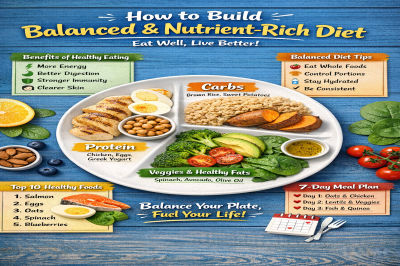
For example, imagine this plate:
Grilled chicken (protein)
Brown rice (complex carbs)
Steamed broccoli and carrots (fiber + vitamins)
A drizzle of olive oil (healthy fat)
That’s a balanced meal. Nothing extreme. Nothing fancy. Just smart combinations.
Ever wondered why this works so well? Because your body needs different nutrients to perform different jobs. You wouldn’t fuel a car with only engine oil, right?
The Importance of Balanced Diet (And Why You Should Care)
I’ll keep this real. When you eat junk all day, your body notices. Fast.
The importance of balanced diet shows up in:
Stable energy levels
Better digestion
Stronger immunity
Healthier weight
Clearer thinking
Improved mood
And that’s just the beginning.
20 Benefits of Healthy Eating
Let me break this down clearly. Here are 20 benefits of healthy eating:
Boosts energy naturally
Improves heart health
Supports brain function
Strengthens immunity
Builds stronger bones
Improves digestion
Supports weight management
Reduces inflammation
Enhances skin health
Improves sleep quality
Balances blood sugar
Lowers risk of chronic diseases
Improves gut health
Enhances mood
Supports muscle growth
Promotes hormonal balance
Increases longevity
Improves metabolism
Reduces cravings
Supports overall vitality
Not bad for simply choosing better food, right?
The Core Components of a Balanced Diet
Let’s build this step by step.
1. Carbohydrates: Choose Smart Fuel
Carbs aren’t evil. Bad carbs are.
Choose:
Brown rice
Oats
Whole wheat bread
Quinoa
Sweet potatoes
Avoid:
Sugary drinks
White bread
Excess pastries
Complex carbs release energy slowly. They keep you full and stable instead of sending you on a sugar rollercoaster.
2. Protein: Your Body’s Repair System
Protein builds muscle, repairs tissue, and keeps you satisfied longer.
Great sources:
Eggs
Chicken breast
Fish
Lentils
Greek yogurt
Tofu
I personally notice fewer cravings when I increase protein. IMO, protein makes dieting feel 10x easier.
3. Healthy Fats: Yes, You Need Them
Don’t fear fat. Fear processed junk.
Include:
Avocados
Nuts
Seeds
Olive oil
Fatty fish
Healthy fats support hormone production and brain function. Skip them, and your body complains fast.
4. Fiber: The Unsung Hero
Fiber keeps digestion smooth and supports gut health.
Eat:
Leafy greens
Fruits
Whole grains
Beans
Chia seeds
Your gut literally thanks you for it.
Balanced Diet Food List You Can Actually Follow
Let’s make this practical. Here’s a simple balanced diet food list you can screenshot:
Proteins
Chicken
Eggs
Fish
Lentils
Chickpeas
Greek yogurt
Carbohydrates
Brown rice
Oats
Whole wheat roti
Sweet potatoes
Quinoa
Healthy Fats
Olive oil
Almonds
Walnuts
Avocado
Vegetables
Spinach
Broccoli
Carrots
Capsicum
Cucumber
Fruits
Apples
Bananas
Oranges
Berries
Mango (yes, you can enjoy it!)
Simple. Affordable. No exotic superfoods required.
Top 10 Healthy Foods You Should Eat Regularly
If I had to narrow it down, these are my Top 10 healthy foods:
Eggs
Salmon
Spinach
Oats
Greek yogurt
Blueberries
Almonds
Sweet potatoes
Lentils
Avocado
These foods pack serious nutrition per bite. They give you protein, fiber, antioxidants, and healthy fats without drama.
Healthy Foods to Eat Everyday
You don’t need a complicated system. Just rotate solid options.
Here are healthy foods to eat everyday:
A serving of vegetables
A source of protein in every meal
Whole grains instead of refined grains
At least one fruit
A handful of nuts or seeds
You follow this consistently, and your body transforms over time.
Consistency beats perfection. Always.
Create Your Own Balanced Diet Chart
Let’s design a simple balanced diet chart you can follow daily.
Sample Daily Structure
Breakfast
Oats + fruit + nuts
OR eggs + whole wheat toast
Lunch
Grilled chicken or lentils
Brown rice or roti
Mixed vegetables
Snack
Greek yogurt or fruit
Handful of almonds
Dinner
Fish or tofu
Salad + light carbs
See how simple that looks? No starvation. No weird detox tea. Just real food.
Try This 7-Day Healthy Eating Plan
Want structure? Here’s a simple 7-day healthy eating plan outline.
Day 1–2
Oats breakfast
Chicken + rice lunch
Fish + vegetables dinner
Day 3–4
Eggs breakfast
Lentils + roti lunch
Tofu stir-fry dinner
Day 5–6
Greek yogurt bowl breakfast
Grilled fish + quinoa lunch
Vegetable soup + protein dinner
Day 7
Flexible but balanced
Include one treat meal
You stay consistent without feeling trapped. That’s the key.
Common Mistakes That Ruin a Balanced Diet
Let’s call these out.
Skipping protein
Avoiding all fats
Overeating “healthy†snacks
Drinking calories
Extreme calorie restriction
Why sabotage your progress with extremes?
A balanced and nutrient-rich diet requires moderation, not obsession.
How I Personally Stay Consistent
I plan meals on Sunday. I buy groceries with intention. I prep basics like rice and chicken in bulk.
I also allow flexibility. If I crave dessert, I eat it in moderation. I don’t punish myself.
FYI, sustainability wins every time.
You don’t need perfection. You need rhythm.
Hydration: The Overlooked Game-Changer
Water supports digestion, energy, and metabolism.
Drink:
2–3 liters daily
More if you train
Many people confuse thirst with hunger. Drink water first. Then decide.
Simple trick. Huge impact.
Supplements: Do You Really Need Them?
Food should come first.
However, you might consider:
Vitamin D
Omega-3
Magnesium
Consult a professional before adding anything serious. Don’t treat supplements like candy.
Whole foods always win.
Final Thoughts: Keep It Simple and Real
Building a balanced and nutrient-rich diet doesn’t require a nutrition degree.
You focus on:
Whole foods
Proper portions
Protein in every meal
Vegetables daily
Healthy fats
Consistency
That’s it.
You now understand the importance of balanced diet, you have a balanced diet food list, a balanced diet chart, a 7-day healthy eating plan, and even the top 10 healthy foods to guide you.
So what’s stopping you?
Start small. Improve one meal today. Stack small wins. Watch your body respond.
And remember, food fuels your life. Treat it that way.