
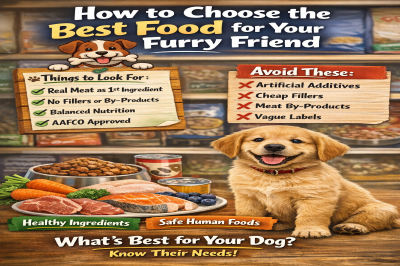
How to Choose the Best Food for Your Furry Friend

Admin
Blog AuthorPicking food for your dog sounds simple… until you stand in the pet food aisle staring at 47 different bags promising “premium nutrition.†Suddenly you feel like you need a PhD in dog nutrition just to feed your pup dinner.
I’ve been there. The first time I brought my dog home, I spent two hours comparing dog food labels like I was studying for a final exam. Chicken meal? Grain-free? Limited ingredients? My brain hurt.
But here’s the good news: choosing the best food for your furry friend isn’t actually complicated once you know what to look for. You just need a few simple guidelines, a bit of label-reading skill, and some common sense.
So if you’ve ever wondered how to choose the best food for your furry friend puppy, or asked yourself “Wait… is this dog food actually healthy?†you’re in the right place.
Let’s break it down together.
Why Your Dog’s Food Matters More Than You Think
Dogs don’t complain about bad nutrition the way humans do. They won’t say, “Hey, this kibble tastes like cardboard and gives me zero energy.†They’ll just keep eating it.
But diet affects almost everything about your dog’s health, including:
Energy levels
Coat shine and skin health
Digestive health
Weight management
Immune system strength
Longevity
Feed your dog high-quality food and you’ll notice the difference fast. Shiny coat, stable energy, fewer stomach issues.
Feed them cheap filler-heavy food… and well… let’s just say their poop will tell the story.
Ever noticed how some dogs seem endlessly energetic while others look sluggish? Yep nutrition plays a huge role.
How to Choose the Best Food for Your Furry Friend Puppy
Puppies need different nutrition than adult dogs. Their bodies grow fast, and their food must support that growth.
When I adopted my puppy, I made the rookie mistake of feeding adult dog food. My vet corrected me quickly puppies need specific nutrients for bone development and brain growth.
Look for “Puppy Formulaâ€
Always choose food labeled:
“Complete and balanced for growth or puppies.â€
This ensures it contains the right balance of:
Protein
Healthy fats
Calcium
DHA for brain development
Check the Protein Source
The first ingredient should always be real meat like:
Chicken
Beef
Salmon
Turkey
Lamb
If the first ingredient says corn, wheat, or soy, put that bag back on the shelf.
Would you want cereal as your main meal every day? Your dog probably wouldn’t either.
Avoid Artificial Additives
Puppies have sensitive digestive systems. Look for food without:
Artificial colors
Chemical preservatives
Excess fillers
Simple ingredients = happier puppy tummy.
Types of Dog Food Brands
Walk into any pet store and you’ll see a wall of options. It feels overwhelming, right?
Let’s simplify it.
Dry Dog Food (Kibble)
This remains the most common dog food option.
Pros:
Affordable
Long shelf life
Easy storage
Helps reduce plaque buildup
Cons:
Lower moisture content
Some brands use fillers
Still, high-quality kibble can provide excellent nutrition.
Wet Dog Food
Wet food comes in cans or pouches.
Pros:
High moisture content
Very tasty for picky dogs
Easier to chew
Cons:
More expensive
Shorter shelf life after opening
Many owners combine wet and dry food for balance.
Fresh or Raw Dog Food
Fresh dog food has become extremely popular recently.
Pros:
Minimal processing
High-quality ingredients
Often human-grade
Cons:
Expensive
Requires refrigeration
IMO, fresh food works great for some dogs but isn’t necessary for every pet.
What to Look for in Dog Food That Is Bad
Not all dog food deserves a spot in your cart. Some brands focus more on marketing than nutrition.
So how do you spot bad dog food?
Red Flags on the Label
Watch for these warning signs:
Meat by-products as the first ingredient
Excess corn or wheat
Artificial preservatives like BHA or BHT
Artificial coloring
Generic meat sources like “animal fatâ€
If a brand hides ingredients behind vague terms, that’s a red flag.
Too Many Fillers
Cheap dog foods rely on fillers to reduce costs.
Common fillers include:
Corn
Soy
Wheat
Rice bran
Dogs can digest some grains, but food packed with fillers lacks real nutrition.
Unrealistic Marketing Claims
Ever seen a bag that says “Veterinarian recommended,†“Premium,†or “Natural�
Those terms often mean… absolutely nothing.
Always read the ingredient list instead of the marketing.
How to Find the Best Food for Your Dog
Every dog differs. What works for one dog might upset another dog’s stomach.
So how do you actually find the best food for your dog?
Start With These Basics
Focus on foods that offer:
Real meat as the first ingredient
Balanced protein and fat
Limited artificial additives
AAFCO nutritional approval
AAFCO certification confirms the food meets basic nutritional standards for dogs.
Watch Your Dog’s Reaction
Dogs give clear feedback if you pay attention.
Healthy dog food usually leads to:
Consistent energy
Firm stool
Healthy coat
Good appetite
If your dog suddenly develops itching, diarrhea, or low energy, their food might be the problem.
Ever switched food and noticed immediate improvement? Yeah… that happens more often than people think.
Choosing the Right Dog Food Quiz (Quick Self-Test)
Still unsure about your dog’s food? Let’s do a quick choosing the right Dog Food quiz.
Answer these questions:
Is real meat the first ingredient?
Does the food meet AAFCO standards?
Does your dog digest it well?
Does your dog maintain healthy weight and energy?
Does your dog actually enjoy eating it?
If you answered “yes†to most questions, you probably picked a solid option.
If you answered “no†several times, it might be time to explore better options.
Simple test… but surprisingly effective.
What Can I Feed My Dog Instead of Dog Food?
Sometimes you run out of dog food or want to add variety. Totally normal.
But not all human food works for dogs.
Here are safe alternatives.
Top 10 Human Foods Dogs Can Eat
These foods can safely supplement your dog’s diet:
Cooked chicken
Plain rice
Carrots
Blueberries
Pumpkin
Apples (no seeds)
Sweet potatoes
Eggs
Peanut butter (xylitol-free)
Salmon
These options provide nutrients, fiber, and healthy fats.
But remember: treats should make up no more than 10–20% of your dog’s diet.
Dogs still need balanced dog food for complete nutrition.
How to Choose the Right Pet Food Based on Your Dog’s Needs
Dogs don’t all eat the same way. Age, breed, size, and activity level matter.
Let’s look at a few key factors.
Age Matters
Choose food based on life stage:
Puppy food – growth and development
Adult dog food – maintenance
Senior dog food – joint support and lower calories
Breed Size Matters
Large dogs and small dogs need different nutrient balances.
Large breed formulas support:
Bone health
Joint support
Controlled growth
Small breeds often need:
Higher calorie density
Smaller kibble size
Activity Level Matters
Does your dog run like a rocket every day?
Active dogs need higher protein and fat levels.
Couch-potato dogs… not so much.
Otherwise you’ll end up with one very chubby Labrador. Trust me, I’ve seen it happen.
Tips for Switching Dog Food Safely
Switching dog food suddenly can upset your dog’s stomach.
Always transition gradually.
Follow the 7-Day Rule
Mix foods slowly:
Day 1–2
75% old food + 25% new food
Day 3–4
50% old food + 50% new food
Day 5–6
25% old food + 75% new food
Day 7
100% new food
This allows your dog’s digestive system to adjust.
FYI sudden changes often lead to diarrhea and unhappy dogs.
Common Dog Food Myths (Let’s Clear These Up)
Dog nutrition comes with a lot of myths. Let’s bust a few.
Myth 1: Grain-Free Is Always Better
Not necessarily.
Some dogs digest grains perfectly fine. Grain-free diets only help dogs with specific allergies.
Myth 2: Expensive Food Is Always Better
Price doesn’t always equal quality.
Some mid-priced foods offer excellent nutrition.
Myth 3: Dogs Should Eat Only Meat
Dogs are omnivores, not strict carnivores.
They benefit from fruits, vegetables, and grains too.
Balance matters.
Conclusion
Choosing the right food for your dog might seem overwhelming at first, but once you understand the basics, it becomes much easier.
Focus on high-quality ingredients, balanced nutrition, and your dog’s specific needs. Pay attention to ingredient labels, watch your dog’s health and energy levels, and don’t fall for flashy marketing.
Remember the key points:
Choose real meat as the first ingredient
Avoid excessive fillers and artificial additives
Pick food based on your dog’s age and activity level
Introduce new foods gradually
Supplement with safe human foods occasionally
At the end of the day, your dog depends on you for good nutrition. And honestly, they deserve it.
After all, they greet you like a rock star every time you walk through the door.
So the least we can do? Feed them food that actually keeps them healthy and happy.
Sounds fair… right?