
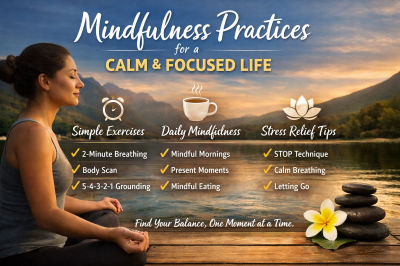
Mindfulness Practices for a Calm and Focused Life

Admin
Blog AuthorFeel like your brain runs a marathon before you even finish your morning coffee? Yeah, I’ve been there. One minute you check your phone, and the next thing you know, your mind jumps between emails, dinner plans, and that awkward thing you said in 2017.
That’s exactly why I fell in love with mindfulness practices for a calm and focused life. Not the “sit on a mountain for 3 hours†kind. I mean real, practical stuff you can actually use in daily life. Let’s talk about how to practice mindfulness in daily life without turning your schedule upside down.
What Is Mindfulness (And Why Should You Care?)
Let’s keep it simple. Mindfulness means paying full attention to what’s happening right now—without judging it.
You notice your thoughts.
You notice your feelings.
You don’t freak out about them.
Sounds basic, right? So why does it feel so hard?
Because your brain loves drama. It replays the past and predicts the future like it’s auditioning for a Netflix series.
When you practice mindfulness in everyday life, you gently bring your attention back to the present moment. Over and over. That’s the whole game.
Why Mindfulness Actually Works
You don’t need a PhD to understand this. When you focus on one thing at a time, your brain relaxes.
Here’s what consistent mindfulness techniques can do:
Reduce stress and anxiety
Improve concentration and focus
Help you respond instead of react
Improve emotional control
Boost overall mental clarity
Ever noticed how calm you feel after a slow walk or deep breath? That’s mindfulness sneaking in :)
How to Practice Mindfulness in Daily Life (Without Making It Complicated)
You don’t need candles, apps, or a meditation cushion. You just need awareness.
1. Start With a 2 Minute Mindfulness Exercise
Yes, just two minutes.
Here’s my go-to 2 minute mindfulness exercise:
Sit comfortably.
Close your eyes.
Take slow breaths.
Focus only on the feeling of air entering and leaving your nose.
When your mind wanders (it will), gently bring it back.
That’s it.
No chanting. No mystical experience. Just breathing. IMO, this tiny habit changes everything if you do it daily.
2. Practice Mindful Mornings
Instead of grabbing your phone the second you wake up, try this:
Feel your feet touch the floor.
Notice the temperature of the room.
Take three slow breaths.
Set one simple intention for the day.
This small shift anchors you in the present. It also prevents your brain from entering panic mode before breakfast.
3. Turn Ordinary Tasks Into Mindfulness Exercises
Want real examples of mindfulness in everyday life? Here you go:
Brushing your teeth: Notice the taste, texture, and movement.
Washing dishes: Feel the water temperature and soap bubbles.
Drinking tea or coffee: Smell it. Taste it. Slow down.
Sounds boring? Maybe. Effective? Absolutely.
You don’t need extra time. You just need attention.
Powerful Mindfulness Techniques You Can Use Anywhere
Let’s get practical. These mindfulness techniques work in traffic, at work, or even during arguments.
The 5-4-3-2-1 Grounding Technique
This technique brings you back instantly.
5 things you see
4 things you feel
3 things you hear
2 things you smell
1 thing you taste
Your brain shifts from chaos to clarity fast. Try it next time anxiety creeps in.
The STOP Technique
This one saved me during stressful meetings.
S – Stop
T – Take a breath
O – Observe your thoughts and feelings
P – Proceed calmly
Simple. Powerful. No one even notices you’re doing it.
H3: Mindful Breathing During Stress
When stress hits, your breathing gets shallow.
Flip the script:
Inhale for 4 seconds
Hold for 4 seconds
Exhale for 6 seconds
Longer exhale = calmer nervous system. Science backs this up.
Mindfulness Exercises for Adults Who “Don’t Have Timeâ€
Let’s be honest. Most adults say, “I’m too busy.â€
I used to say that too. Then I realized I spent 45 minutes scrolling social media :/
You don’t need hours. You need intention.
Here are easy mindfulness exercises for adults:
Mindful walking: Walk slowly and notice each step.
Body scan: Mentally scan from head to toe and release tension.
Mindful listening: Focus completely when someone talks. No interrupting.
Ask yourself: When was the last time you fully listened without planning your reply?
Exactly.
Mindfulness Exercises for Groups (Yes, It’s Not Weird)
Think mindfulness only works solo? Not true.
I’ve led small mindfulness exercises for groups, and people always feel more connected afterward.
Try these:
1. One-Minute Silent Focus
Everyone sits quietly and focuses on breathing for one minute. Short, simple, effective.
2. Gratitude Circle
Each person shares one thing they appreciate today. This boosts positivity fast.
3. Mindful Observation
Place an object in the center. Ask everyone to observe it quietly for 60 seconds. Then discuss what they noticed.
It sounds simple, but it sharpens awareness in surprising ways.
Comparing Mindfulness vs. Multitasking
Let’s settle this.
Multitasking feels productive. It isn’t.
When you multitask:
You split attention.
You increase mistakes.
You raise stress levels.
When you practice mindfulness in everyday life:
You focus on one task.
You finish faster.
You feel calmer.
Which sounds better?
I used to brag about multitasking. Now I brag about finishing one thing properly.
Common Mistakes People Make With Mindfulness
I made all of these, so learn from me.
Expecting Instant Zen
You won’t feel enlightened after one session. Stick with it.
Trying to “Stop†Thoughts
You can’t shut your brain off. You can only observe it.
Being Too Hard on Yourself
Your mind will wander. That’s normal. Bring it back gently.
Mindfulness works because you practice returning, not because you stay perfect.
How to Build a Simple Daily Mindfulness Routine
Want structure? Here’s a basic plan:
Morning (2–5 minutes):
Breathing exercise
Set intention
Afternoon (1 minute reset):
STOP technique
Deep breathing
Evening (5 minutes):
Body scan
Reflect on one positive moment
Total time: Less than 15 minutes.
You spend more time choosing what to watch on Netflix.
Real-Life Examples of Mindfulness in Everyday Life
Let’s make this practical.
You feel angry → You pause and breathe before replying.
You feel overwhelmed → You focus on one task only.
You eat dinner → You taste each bite instead of scrolling.
These small moments shape your mental clarity over time.
The goal isn’t perfection. The goal is awareness.
The Long-Term Benefits of Mindfulness Practices for a Calm and Focused Life
Consistency changes everything.
When you stick with these mindfulness exercises, you start noticing:
Clearer thinking
Better sleep
Fewer emotional outbursts
Improved focus at work
Stronger relationships
And honestly? You just feel more in control.
Who doesn’t want that?
Final Thoughts: Keep It Simple
Here’s the truth. You don’t need a dramatic life overhaul.
You need small, consistent mindfulness practices for a calm and focused life.
Start with a 2 minute mindfulness exercise.
Practice awareness during daily tasks.
Use simple mindfulness techniques when stress hits.
That’s it.
No perfection required. Just presence.
So here’s my challenge: Try one exercise today. Just one. Notice what changes.
You might feel calmer.
You might focus better.
You might even surprise yourself.